


Tranexamic Acid (TXA): From Clinical Hemostasis to Multifunctional Star, Backed by Science
Core Science: HowTranexamic Acid Works
- Hemostatic Mechanism: Protecting Coagulation Balance
TXA’s primary function lies in its ability to reversibly block the lysine-binding sites on plasminogen, preventing its activation into plasmin. This inhibits the breakdown of fibrin, the key structural component of blood clots, thereby stabilizing clots and stopping bleeding effectively. Additionally, TXA directly suppresses plasmin activity and reduces complement activation, making it a preventive treatment for hereditary angioedema. This well-documented mechanism has made TXA indispensable in maNAGing various bleeding conditions, including visceral hemorrhage, surgical bleeding, menorrhagia, and retinal hemorrhage.
- Aesthetic Breakthrough: Fighting Hyperpigmentation
In recent years, TXA has gained widespread recognition for its efficacy in treating melasma and hyperpigmentation. By competing with tyrosine for binding sites on tyrosinase—the enzyme critical for melanin production—TXA inhibits melanin synthesis and blocks the transfer of melanin granules to keratinocytes. In Japan, melasma is officially approved as an indication for TXA, underscoring its clinical validity in skin lightening.
- Versatile Formulations for Every Need
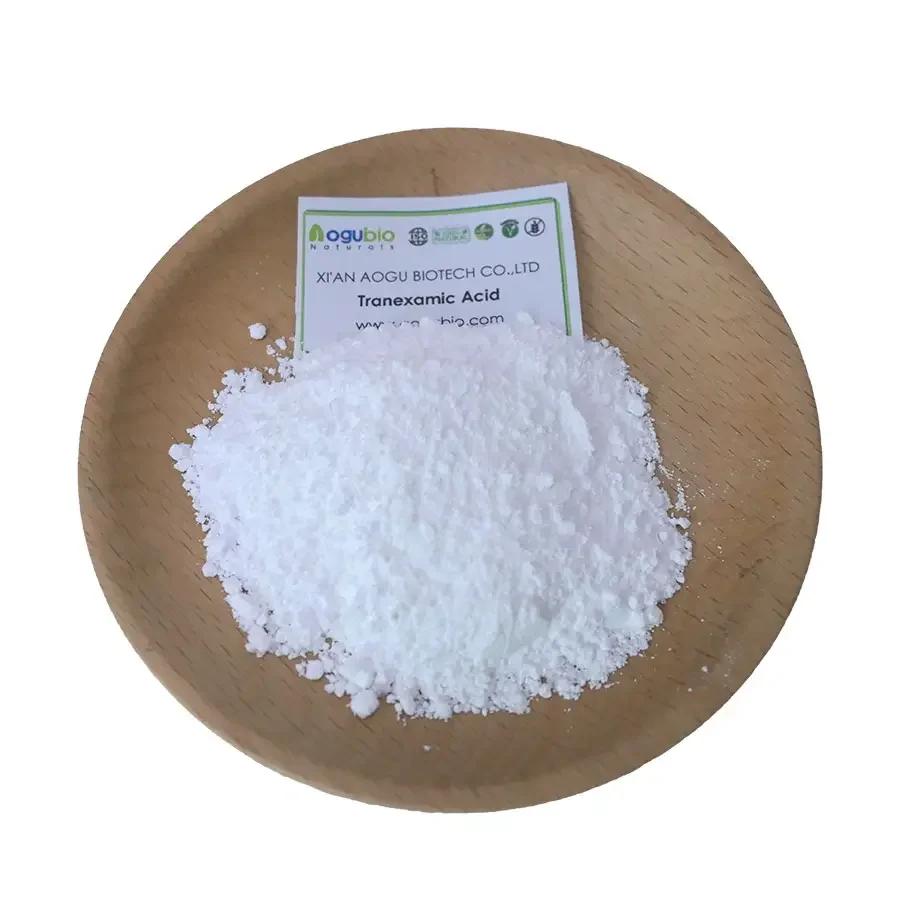
TXA is available in multiple formulations to suit diverse applications:
- Injectables: Small-volume injections (2ml:0.1g), intravenous infusions, and sterile powders cater to clinical hemostasis needs.
- Oral formulations: Tablets and capsules for systemic treatment of conditions like menorrhagia or hereditary angioedema.
- Topical products: Creams, solutions, and liposomal gels (2%-5% concentration) for skincare use. When combined with microneedling or laser therapy, topical TXA’s skin penetration and efficacy are significantly enhanced.
Clinical Evidence: Safety and Efficacy Backed by Research
- Surgical Hemostasis: Reducing Bleeding Without Cardiovascular Risks
A 2025 subgroup analysis published in JAMA Surgery (n=9,535) demonstrated that prophylactic use of TXA in general surgery reduced major bleeding events from 10.5% to 8.0%. Importantly, the incidence of adverse cardiovascular events (11.9%) was not significantly different from the placebo group (12.5%). This high-quality evidence confirms TXA’s effectiveness in minimizing surgical bleeding while maintaining cardiovascular safety, solidifying its role as a standard of care in non-cardiac surgeries.
- Melasma Treatment: Superior Efficacy and Tolerability
A head-to-head study comparing 5% TXA cream with 4% hydroquinone cream found both significantly improved Melasma Area and Severity Index (MASI) scores. However, the TXA group achieved a greater reduction in melanin area percentage with fewer adverse effects. A PubMed-indexed systematic review and meta-analysis further showed that microneedling combined with topical TXA reduced MASI scores by 4.73 points at 12 weeks, with effects lasting up to 20 weeks—validating the long-term efficacy of this combination therapy.
- Safety Profile: Low Adverse Event Rates
Clinical data indicate TXA is well-tolerated, with adverse events reported in only 5%-8% of patients. Mild gastrointestinal symptoms (e.g., nausea, diarrhea) are transient, and thrombotic risks are minimal with short-term (3-5 day) use. Allergic reactions occur in less than 0.3% of cases. As a Class B medical insurance drug in China and widely reimbursed globally, TXA offers exceptional cost-effectiveness and long-term safety.

Market Trends: Expanding From Clinical to Consumer
- Medical Sector: Standardization in Surgical Hemostasis
Driven by results from large-scale trials like POISE-3, TXA’s prophylactic use will become more widespread in general surgery, gynecology, and dentistry. Demand will grow steadily in scenarios such as postpartum hemorrhage prevention and adjuvant treatment for hemophilia-related bleeding, fueling expansion of the injectable and oral TXA markets.
- Aesthetics & Skincare: Technological Upgrades and Segmentation
As a top skincare ingredient for "brightening and spot-lightening," TXA is reshaping the beauty market. Future innovations will focus on penetration-enhancing technologies (e.g., liposomal encapsulation, nanotechnology) to boost skin absorption. Specialized products targeting melasma, acne scars, and post-inflammatory hyperpigmentation, as well as combinations with vitamin C and niacinamide, will dominate niche segments.
- Global Market Growth: Dual-Driver Expansion
Industry data show the TXA API and formulation market is growing robustly, driven by both medical and beauty demands. In Asia, strong demand for spot-lightening products in Japan and China is accelerating the growth of topical TXA. In Europe and North America, focus remains on surgical hemostasis and rare disease treatment, creating a diversified global market landscape.
Why Choose Tranexamic Acid?
Tranexamic acid stands out due to its proven efficacy, wide safety margins, and multifunctional applications. TXA can provide consistent and evidence-based results, whether in clinical environments that require reliable hemostasis or in skincare programs targeting hyperpigmentation. With the progress of research and the evolution of formulations, TXA is expected to continue to be a major component in the global medical and consumer health markets. As a company that can provide the most cost-effective TXA, XI'AN AOGU is certainly very optimistic about the future prospects of this product and welcomes people from all walks of life to consult.

You can directly contact me in the following ways:
Name: Mary Gao Email: sales05@nahanutri.com
Whatsapp:+86-17502983925 Website: www.aogubio.com
References
- JAMA Surgery. 2025; Subgroup analysis of 9,535 patients: Prophylactic tranexamic acid in general surgery reduces major bleeding without increasing cardiovascular risks.
- PubMed-indexed Systematic Review and Meta-Analysis. Efficacy of microneedling combined with topical tranexamic acid in melasma treatment: 12-week and 20-week follow-up.
- Clinical Trial Data. Comparative study of 5% tranexamic acid cream vs. 4% hydroquinone cream in melasma management.
- Japanese Pharmaceutical Affairs Bureau. Approved indications for tranexamic acid: Melasma treatment.
- POISE-3 Trial Collaborative Group. Tranexamic acid in non-cardiac surgery: A randomized controlled trial.