
What’s Fueling the Global Menthol Crystal Market? Exploring Their Cooling Science and Industry Impact
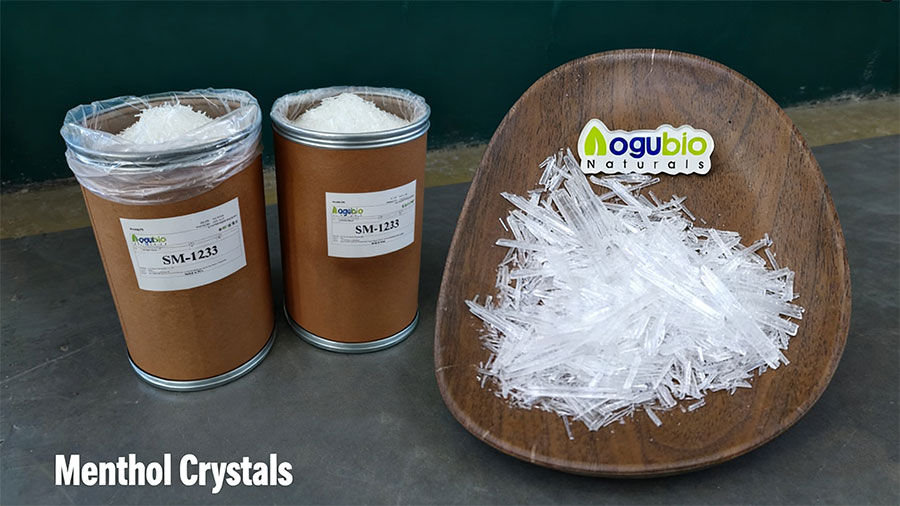
Menthol crystals stand as a faScinating compound, celebrated globally for their intense cooling sensation and wide range of applications. Derived primarily from the essential oil of mint plants, particularly corn mint (Mentha arvensis), these white, crystalline solids are far more than just a refreshing scent; they are a cornerstone ingredient in the pharmaceutical, personal care, and food industries.
The Science Behind the Chill: How Menthol Works
Menthol, chemically classified as a cyclic monoterpene alcohol, is a waxy substance and the solid component of mint oil. The crystals are typically obtained through a specialized freezing process of mint essential oil, which causes the menthol to precipitate and crystallize.
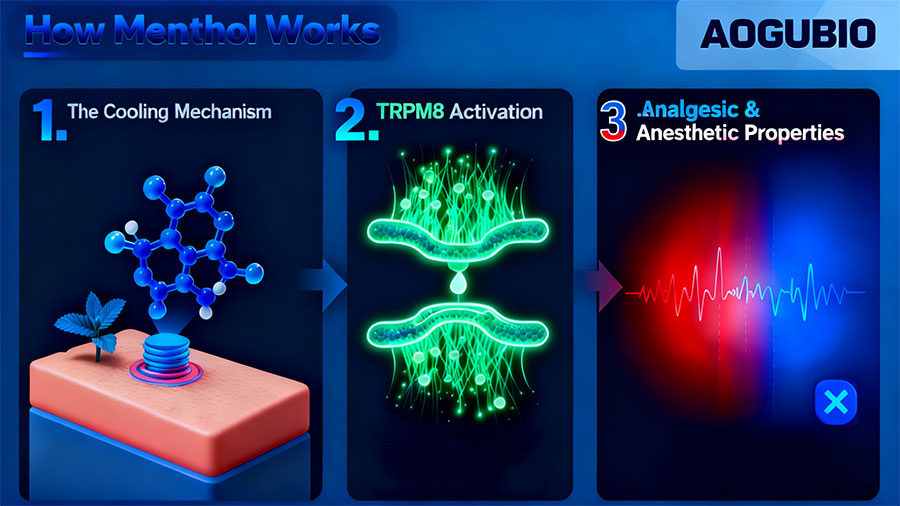
- The Cooling Mechanism:The profound cooling sensation experienced upon contact with menthol is not due to an actual drop in temperature. Instead, it is a clever chemical illusion. Menthol selectively activates a specific sensory receptor in the skin and mucous membranes known as the TRPM8 (Transient Receptor Potential Melastatin 8) receptor (Source: Menthol - Wikipedia; PubChem - NIH).
- TRPM8 Activation:This receptor is naturally activated by cold temperatures. By chemically mimicking this cold signal, menthol effectively tricks the nervous system into perceiving coolness, even at room temperature.
- Analgesic & Anesthetic Properties:Beyond cooling, menthol is a well-documented counter-irritant and analgesic agent. Studies suggest it can block calcium and voltage-sensitive sodium channels, thereby reducing the neural activity that signals pain and muscle tension. This is why it is widely used in topical pain relief products (Source: Menthol - Wikipedia).
Your Quick Guide to Menthol Crystal Usage and Benefits
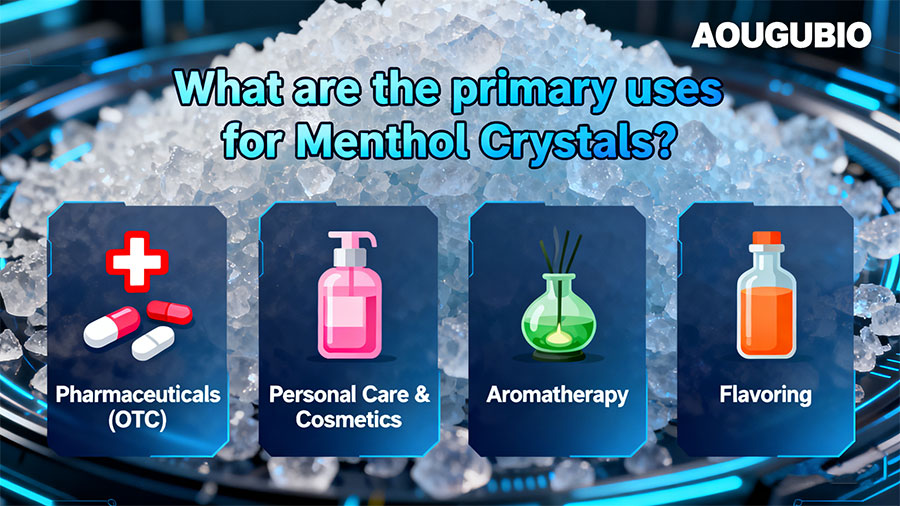
1. What are the primary uses for Menthol Crystals?
Menthol crystals are incredibly versatile, finding use across numerous sectors:
- Pharmaceuticals (OTC):As an active ingredient in topical analgesics (muscle rubs, balms), decongestants, cough drops, and throat lozenges.
- Personal Care & Cosmetics:In toothpaste, mouthwashes, aftershaves, shampoos, body sprays, and cooling gels for their refreshing and astringent properties.
- Aromatherapy:Used in diffusers and steam inhalations to relieve nasal congestion and stress.
- Flavoring:In chewing gum, confectionery, and liqueurs (Source: Persistence Market Research; Entrepreneur India).
2. Can Menthol Crystals help with respiratory issues?
Yes. The most common therapeutic application is as a decongestant. While research indicates menthol may not objectively clear a blocked nasal passage, it provides a strong subjective sensation of easier breathing. It achieves this by stimulating the cold receptors, which can alleviate the perceived discomfort of congestion associated with colds or allergies (Source: Menthol - Wikipedia; Green Herbology).
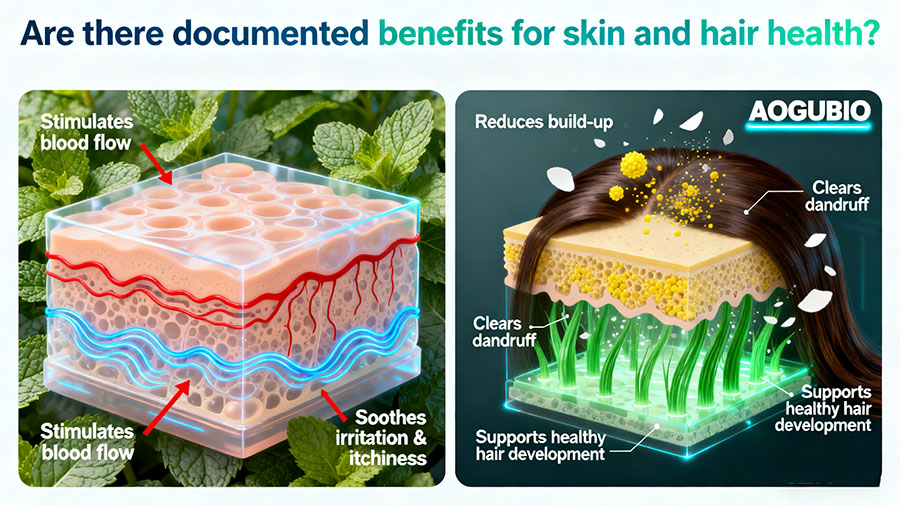
3. Are there documented benefits for skin and hair health?
Menthol stimulates blood flow when applied topically, which is beneficial for the scalp and skin. Its antimicrobial and anti-inflammatory properties have been noted in research, making it useful for:
- Soothing irritationand itchiness on the skin.
- Scalp careproducts to reduce build-up, clear dandruff, and support healthy hair development (Source: Doctor Hoy's; Green Herbology).
Menthol Crystals Market: Trends and Future Direction
The global market for menthol crystals is experiencing robust growth, primarily fueled by a decisive shift in consumer preference toward natural and organic ingredients.
Key Market Drivers & Trends:
- Natural over Synthetic:The market for natural menthol crystals, derived from mint oil, is outpacing synthetic variants. Consumers and the heavily-regulated cosmetics and pharmaceutical industries increasingly demand clean-label, plant-based solutions (Source: Precedence Research; Elchemy).
- Expanding Therapeutic Applications:The reliable demand for cold/flu remedies and topical pain relief products continues to be a major growth engine, especially in post-pandemic scenarios. The pharmaceutical segment is expected to remain a significant revenue generator (Source: IMARC Group; Niir Project Consultancy Services).
- The 'Cooling' Sensory Effect:Menthol’s unique ability to deliver a powerful cooling sensation ensures its continued dominance in oral care (toothpaste, mouthwash) and premium personal care products like shaving gels and specialized cooling apparel.
- Technology Integration:Manufacturers are increasingly adopting advanced techniques like Short-path Molecular Fractional Distillation (SPMFD) and improved Seeding Crystallization (SSC) to ensure the highest purity and consistency of menthol crystal batches, reducing thermal degradation and maximizing yield (Source: PMC - NIH).
- Geographic Dynamics:Asia-Pacific remains the world's largest production and consumption hub, led by countries like India and China. North America and Europe are driving the demand for premium, high-purity natural menthol crystals in their clean-label cosmetic and OTC sectors (Source: Accio; Elchemy).
Market Projection (Illustrative Data):
Current market analysis projects steady growth for the natural menthol crystals segment, with global valuation expected to reach over USD 1.2 billion by the end of 2030, driven by a Compound Annual Growth Rate (CAGR) of around 4-5.5% (Source: Accio; Niir Project Consultancy Services).
A Note on Safety and Research Integrity
It is crucial to note that while widely used and generally safe when properly diluted, menthol crystals are highly concentrated. Research underscores the need for safe handling; for topical use, it must be diluted with a carrier oil before skin contact. Furthermore, extensive research has been conducted on the use of menthol as a flavor additive in tobacco products, where it has been shown to mask the harshness of smoke and may increase the product's appeal and addictive potential (Source: PMC - NIH). Responsible sourcing and application are key to leveraging its benefits.